
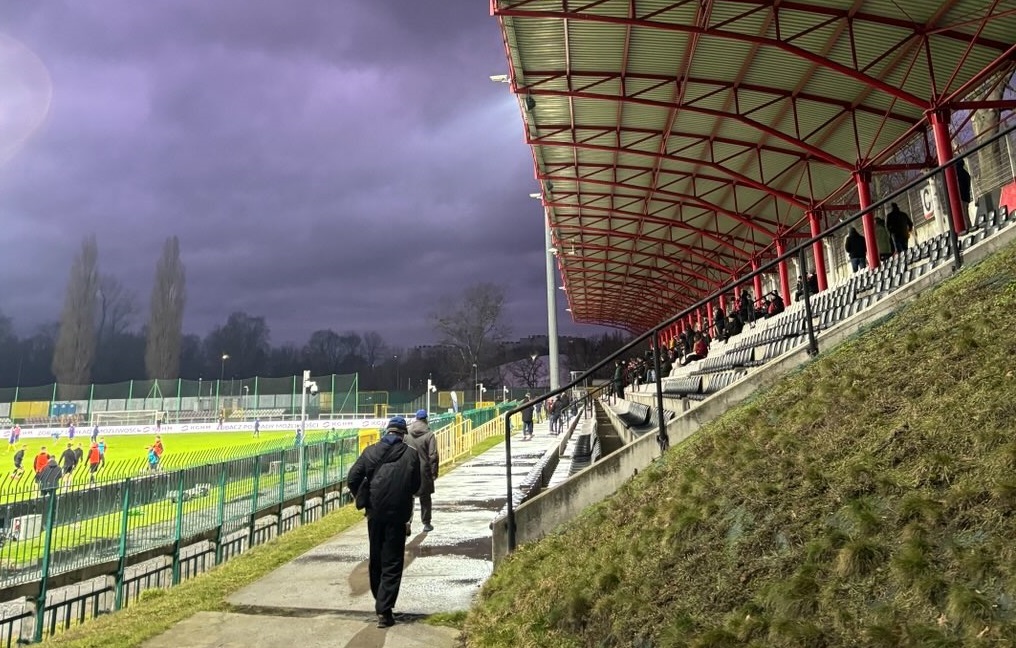
Much has been made of the rise of Polish football’s Ekstraklasa in recent years. While the quality on the pitch is now being recognised with greater respect across Europe, the atmosphere and culture that come with Polish football continue to be well received on the global stage.
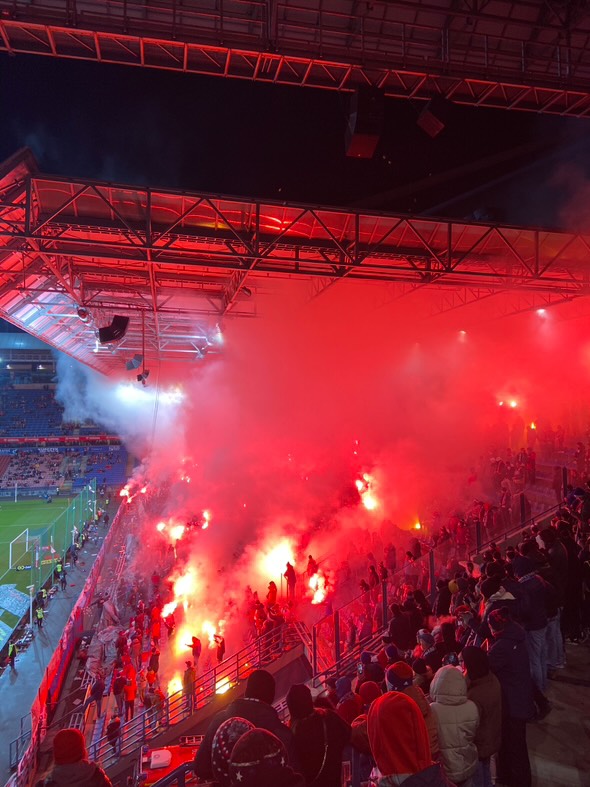
My first taste of Polish football had me hooked, when I went to Wisła Kraków, who were hosting GKS Katowice in November 2023. I’d consider Wisła the sleeping giant of Polish football, a team that should be comfortably nestled in the top flight but has been dogged by corruption and relegation. Still, they attract amazing crowds, even in the second tier. A melee of noise and flames preceded an equaliser and then a winner in the tenth minute of injury time. From that moment, there was no turning back.
The following February showed me what a rivalry in Poland can offer. I took a train from Kraków and then a bus that went all around the houses to the Silesian Stadium. The 25-minute walk to the stadium was lined with blue flashing lights, acting more as a deterrent than a sign of any impending fracas. Ruch Chorzów took on Legia Warsaw in a famed derby, where the visible disdain for Poland’s most successful club was on full display from the Silesian giants.
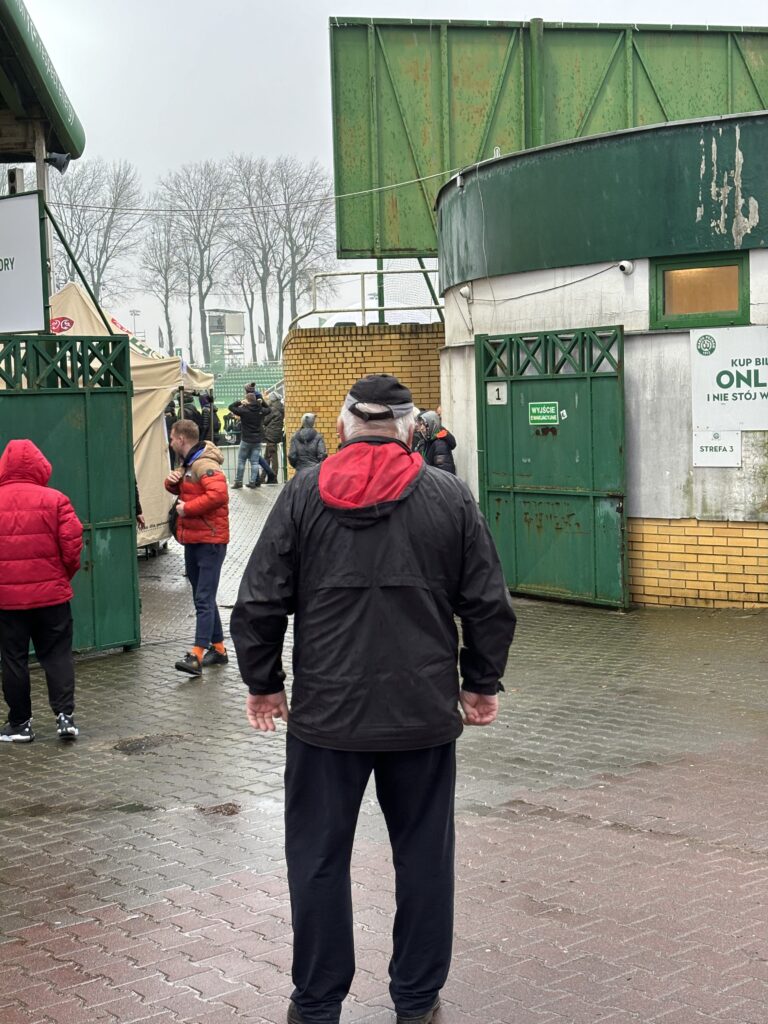
The match itself played second fiddle to the amazing atmosphere created by the Ruch Chorzów faithful and offered my first glimpse into the friendships shared between Polish clubs. I couldn’t understand at first why scarves and T-shirts adorned with other teams’ badges were so prevalent. As time has passed, I’ve begun to loosely grasp just how deep these bonds run, relationships that stretch back decades, but that might be for another day.
Most top-flight clubs now have more modern stadiums, grounds built for Euro 2012, used to grow matchday attendance and boost their European ambitions. However, a trip to Poznań, where the second team, Warta Poznań, currently play at the Dyskobolia Grodzisk Wielkopolski Stadium, showcases an example of the wonderfully designed old-school venues. Warta have had to relocate to this ground, 30 minutes outside Poznań, due to their home ground not meeting regulations. But the haphazard design is well worth a visit. This is all beyond the obvious draw of Lech Poznań, whose ultras are famed across Europe for creating a cauldron-like atmosphere.
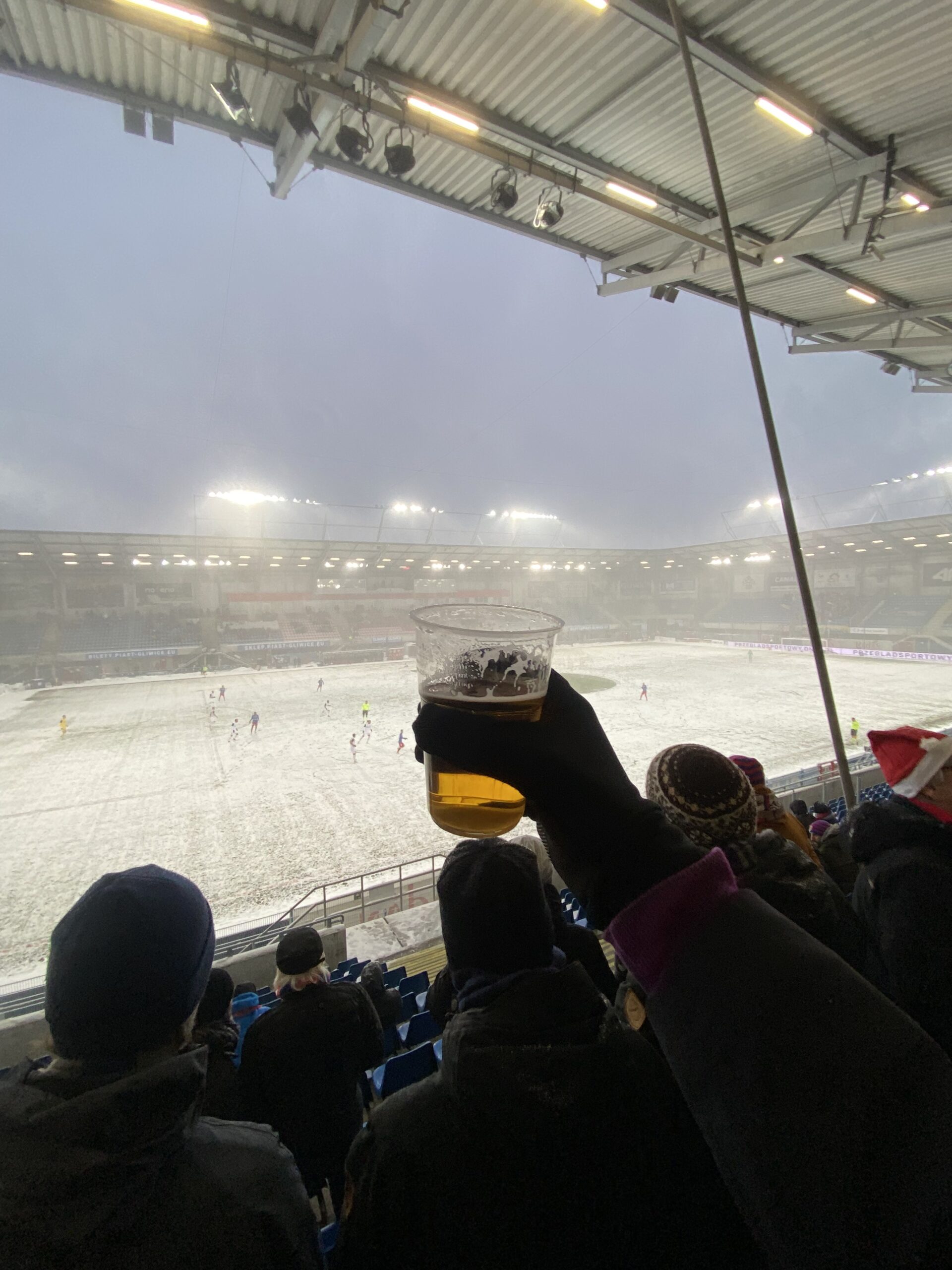
Winter in Poland conjures images of heavy snow; and an ill-fated trip to Piast Gliwice vs. Puszcza Niepołomice in late 2023 was no exception. After a long trudge from central Gliwice to the Piotr Wieczorek Municipal Stadium, with hands like icicles, I arrived to find the pitch covered in snow. Valiant efforts were made to get the game going—even the players got involved in snow shovelling—but after 15 minutes, the match was called off. Even though the game never really got going, it was yet another reminder that you never quite know what to expect with football here. Anywhere else, this would’ve been postponed the day before.
Further north you find the port city of Gdynia on the Baltic Coast; a town popular with tourists today with modern beachfront design and a short train away from Gdansk. Whilst the rivalry between Arka Gdynia and Lechia Gdansk is famed, I settled for a tie between Arka and Warta Poznań in a stadium carrying with it the same modern feel you might find in the city itself. This match was a procession for Arka Gdynia in their march towards promotion back to the top flight and whilst it may not carry the same ferocious reputation as it might have done years ago, the mixture of family friendly and diehard ultras makes for an enjoyable atmosphere.
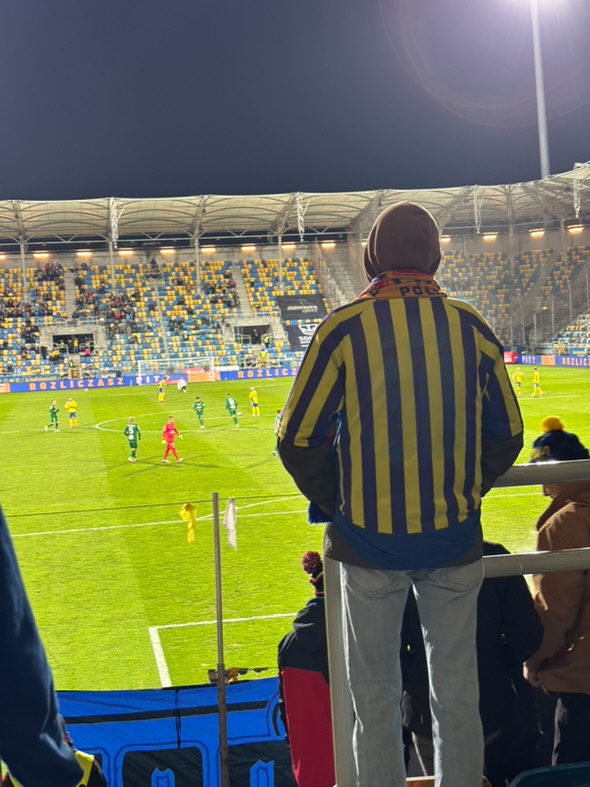
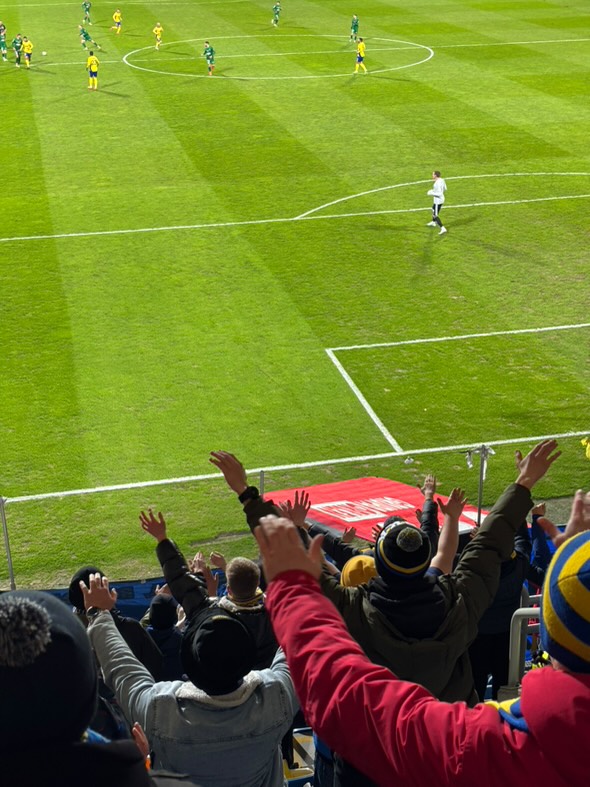
Behind the goal at Arka Gdynia, from pensive to ardent
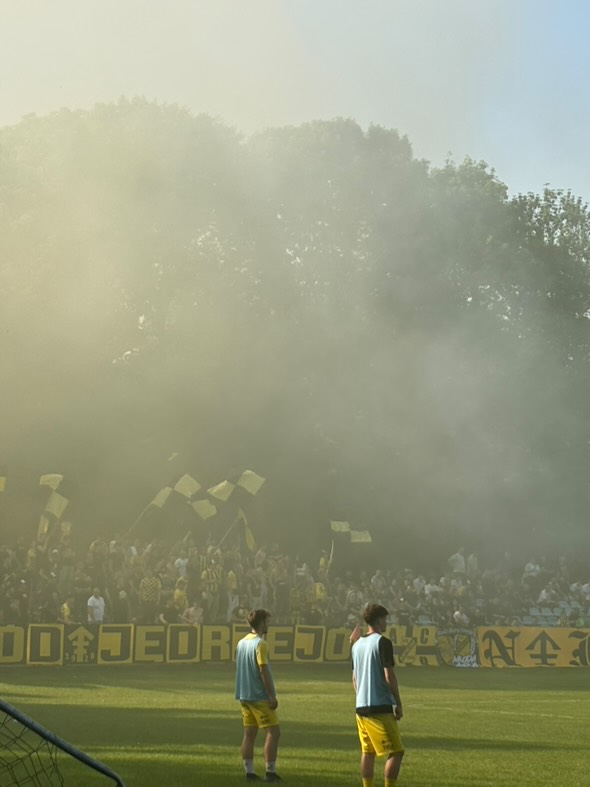
More recently, I made my first foray into the lower leagues of Polish football: Naprzód Jędrzejów vs. Pogoń Staszów, playing in the fifth tier on a warm May day. Fans from the local top-flight side, Korona Kielce, turned out in good numbers to support the local team. The ground, tucked away on the outskirts of an 18,000-person town and surrounded by trees, is a true testament to the historic grounds still found across Poland.
I think Poland makes a great effort to bring fans through the turnstiles, something that can’t always be said of more globally recognised European leagues. Tickets for top-flight games can go for 10 euros, and there’s often a mix of family-friendly fun and intense support from the diehard fanbase. A kiełbasa and a pint of Żywiec go down a treat, particularly on those colder days. I’m always drawn by the smell of the grill and the smoke signals it sends up at half-time.
With a brief summer lull before the new season begins, the Polish league kicks off again in mid-July. If you’re looking to scratch the itch for some European football and experience amazing atmospheres beyond well trodden paths this summer, Poland has you covered.
Photos and words by Will Dunn – Instagram: @moments_from_matchday